Customer Success & Customer Experience Executive

Zac Perkins

Building CS organizations that run on human judgment and AI scale — and turning them into revenue engines.

"I'm a Customer Success executive with 10+ years in B2B SaaS. My career has been about one thing: turning CS organizations into revenue engines. At Alteryx I scaled managed ARR from $225M to $477M while building the playbook for AI-augmented, expansion-led CS. Most recently I founded the CX function at PortSwigger — five teams, a CSM-sourced expansion motion built from zero, and AI embedded across the entire operation."

Zac Perkins
By The Numbers

A track record measured in retention and growth

$477M
Peak managed ARR (Alteryx)
130%+
Net Revenue Retention sustained
Team scale, 10 → 40+ CSMs
YoY upsell growth (PortSwigger)
4.76/5
CSAT, 6 straight quarters
Leadership Thesis

How I think Customer Success should be run

CS is a revenue function

NRR is the North Star, not CSAT or ticket volume. CSMs should be accountable for revenue growth, not just retention — I've built this motion from zero, twice.

Human + AI hybrid teams

AI handles scale and consistency — health scoring, triggered playbooks, call scoring. Humans own relationships and complexity.

Segment by outcome complexity

Enterprise, Scale, and Digital tiers based on what the customer actually needs — not just ARR size.

CSMs need technical credibility

In complex software, customers trust CSMs who understand what they're actually running — that's earned at the whiteboard, not just the QBR.

Build systems that outlast you

Playbooks, health scoring, coaching frameworks — infrastructure that keeps running whether or not I'm in the room.

AI In Practice

Five systems I've built into day-to-day CS operations

Each project below includes a working interactive demo — a faithful replica of the real system, populated entirely with synthetic data. Every company, contact, deal, and score is fictional; no customer or company-confidential information appears anywhere on this site.
Coaching at scale

Scaling CSM Coaching with AI

Combining Claude and Gong AI to turn every customer call into a coaching opportunity — at a scale no single leader could reach alone.

Read more ▾Collapse ▴

The Problem

Coaching every CSM after every call wasn't scalable — I could only manually listen to a fraction of conversations, so most calls happened with zero structured feedback, and the coaching I gave depended entirely on whichever calls I happened to catch. No common rubric existed for comparing CSMs consistently.

The Solution

I built an AI-powered coaching scorecard combining Claude (rubric design) and Gong AI (automatic call scoring), evaluating every CSM-customer interaction against 10 weighted dimensions — rapport, active listening, problem resolution, communication clarity, product expertise, customer advocacy, follow-through, strategic guidance, and objection handling — with explicit 0–4 rating criteria written to reward real skill over performative habits.

Impact

104 calls scored since inception
Every CSM coached, not just the calls I happened to catch
Manual review time refocused on the calls that need it most
Launch interactive demo → Explore the scorecard, rubrics, and team view — all data synthetic
Engagement intelligence

Scaling CS Engagement Intelligence with AI

Two AI-built workflows that turn account data into prioritized, personalized customer outreach — without adding headcount.

Read more ▾Collapse ▴

The Problem

Two bottlenecks limited how proactively my team engaged customers: knowing which accounts were ready for a VP-level touchpoint meant manually digging through Salesforce every two weeks, and building a quality cold-outreach list meant manually cross-referencing CRM data, LinkedIn, and news for every contact.

The Solution

  • CS Executive Connect — a fortnightly workflow that scans Salesforce for the right moment to reach out, ranks accounts by tier, identifies the most senior reachable contact, and drafts a personalized executive-voice email for review.
  • AI Contact Mapping — an on-demand workflow that builds a 10-contact outreach map for any account, enriched with LinkedIn research and persona scoring, with personalized emails ready to send.

Both are built around hard quality gates: every email has to pass a "noise test" — would this be indistinguishable from the 100 other emails in this person's inbox? If yes, it gets rewritten.

Impact

Outreach quality scales with account count, not hours in the day
Team time shifted from lookup to actual relationship conversations
Every email grounded in real CRM & research evidence — never a mail-merge
Launch interactive demo → See a fortnightly run, drafted emails with evidence, and a contact map — all data synthetic
Always-on decision support

Always-On CS Intelligence

Four live, AI-built dashboards — pulling fresh Salesforce, Gmail, and Calendar data on every open — that replaced static reports with always-current decision support.

Read more ▾Collapse ▴

The Problem

Static reports go stale the moment they're exported. Pipeline reviews, renewal health, and daily priorities lived in decks and spreadsheets that were already out of date by the time anyone opened them.

The Solution

  • Renewals & Expansion Dashboard — live renewal and expansion pipeline, cross-referenced with support cases and call activity.
  • Renewal Win/Loss Analysis — automatically classifies every closed renewal, separating real downsell from a quiet price drop.
  • Weekly Pipeline Review — the full open pipeline categorized by urgency, with inbox signals layered in.
  • Morning Dashboard — a single daily view of calendar, inbox, pipeline, and renewals, with one-click prompts into deeper AI workflows.

One architecture, four use cases — each dashboard calls Salesforce, Gmail, or Calendar directly every time it's opened. Nothing to rebuild by hand.

Impact

Leadership time goes into decisions, not data assembly
Built once, used daily — outlasts any single report cycle
Same connector pattern scales to whatever view leadership needs next
Launch interactive demo → Flip through all four dashboards and watch them "refresh" — all data synthetic
Prototype · agentic workflow

The Time-to-Value Agent

A working prototype of an onboarding agent that detects why an implementation has stalled, drafts the specific intervention, and routes it by decision rights.

The Problem

Onboarding programs usually discover a customer is stuck at the QBR, or at renewal. Usage-based health scores make it worse: the two most common stall causes — a single-threaded champion and an implementation with no defined business outcome — both read as green. By the time a human notices, weeks of the time-to-value clock are gone.

The Solution

A prototype agent that reads usage, ticket, engagement, and stakeholder signals daily, then does three things a health score doesn't: it checks for blockers before classifying, so a security review doesn't get misread as disengagement; it names a specific stall pattern rather than emitting a risk number; and it assigns decision rights by reversibility — the agent owns observation, humans own consequence. Every draft carries an owner, a date, and the evidence behind it, and nothing customer-facing sends without a person.

Why it matters

Stalls surfaced weeks earlier than a review-cycle cadence
Named root cause, so the CSM knows what to actually do
Decision rights drawn deliberately — the leadership call, not the technical one
Launch interactive demo → Eight implementations, the agent's diagnosis and drafts, its decision-rights model, and what it got wrong — all data synthetic
Critical accounts · program design

The Red Accounts Program

A risk-escalation program I designed and led at Alteryx: shared risk definitions, cross-functional ownership, and a reporting cadence that ran from the CSM's desk to the CEO and Board.

Read more ▾Collapse ▴

The Problem

Risk was being caught inconsistently, defined differently by every team that touched an account, and reported up in whatever format someone had time to put together that week. A CSM's read on a shaky relationship and a hard financial risk nine months from renewal were getting treated the same way, and leadership found out about the largest losses close to when the customer did.

The Solution

I designed a two-tier risk framework, Risk Mitigation versus a confirmed Red Account, with entry and exit criteria set the moment a record was created, and a RACI model that gave every risk reason (competition, financial, organizational, product) an explicit owner across CSM, Renewals, Sales, and Solutions Engineering. Detection combined CSM judgment with automated engagement and risk-event triggers, unified into one dashboard that fed a weekly theatre-level review, a monthly Executive Red Account Summary, and Top 20 deal reviews at the CEO and Board level.

Impact

One shared definition of risk across every function, not five
Every account exited on defined criteria — saved or lost, never left open-ended
Same underlying data, from a CSM's dashboard to the Board's Top 20 review
Launch interactive demo → The risk framework, the RACI model, a sample portfolio, and the reporting cadence — program is real, accounts are synthetic

Writing

Perspectives on leading humans and AI

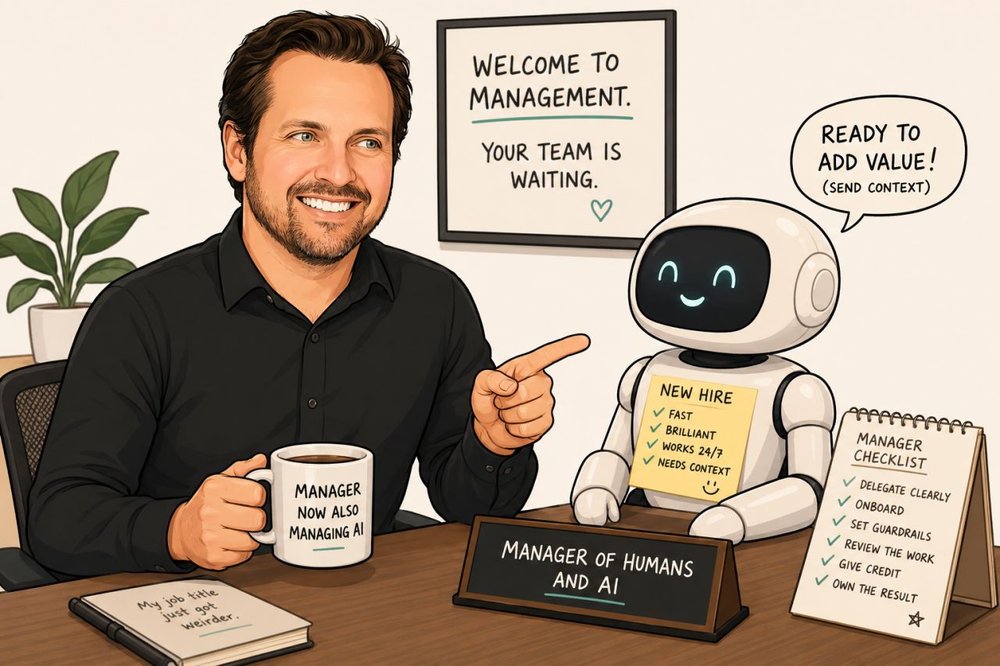
Illustration: a manager welcoming a friendly AI robot as a new hire, with a manager checklist — delegate clearly, onboard, set guardrails, review the work, give credit, own the result

Congratulations on Your Promotion to Management

No pay bump. No new title. HR wasn't consulted. But if your company is adopting AI, surprise — you have direct reports now. Working well with AI isn't just a tooling skill; it's a management skill: delegate clearly, onboard with context, set guardrails, review the work, give credit — and own the result.

"The people pulling ahead right now aren't the best prompters. They're the ones treating AI like a talented new direct report."
Read the full post on LinkedIn →
Illustration: a scientist in a lab coat beside a Frankenstein-style robot surrounded by everyday internet data — cat photos, food pics, shopping carts, and emojis — crackling with electricity

How Did We Get Here?

Instead of predicting where AI goes next, a look back at how it was built — from the Industrial Revolution's mountains of stuff, through the dot-com data explosion, to the machine-learning lightning bolt. Frankenstein's creature was assembled from parts that were already lying around. So was AI — and the parts were ours.

"We didn't just witness this revolution. We were the donors. The creature has our fingerprints all over it — mostly because they're literally our fingerprints."
Read the full article on LinkedIn →
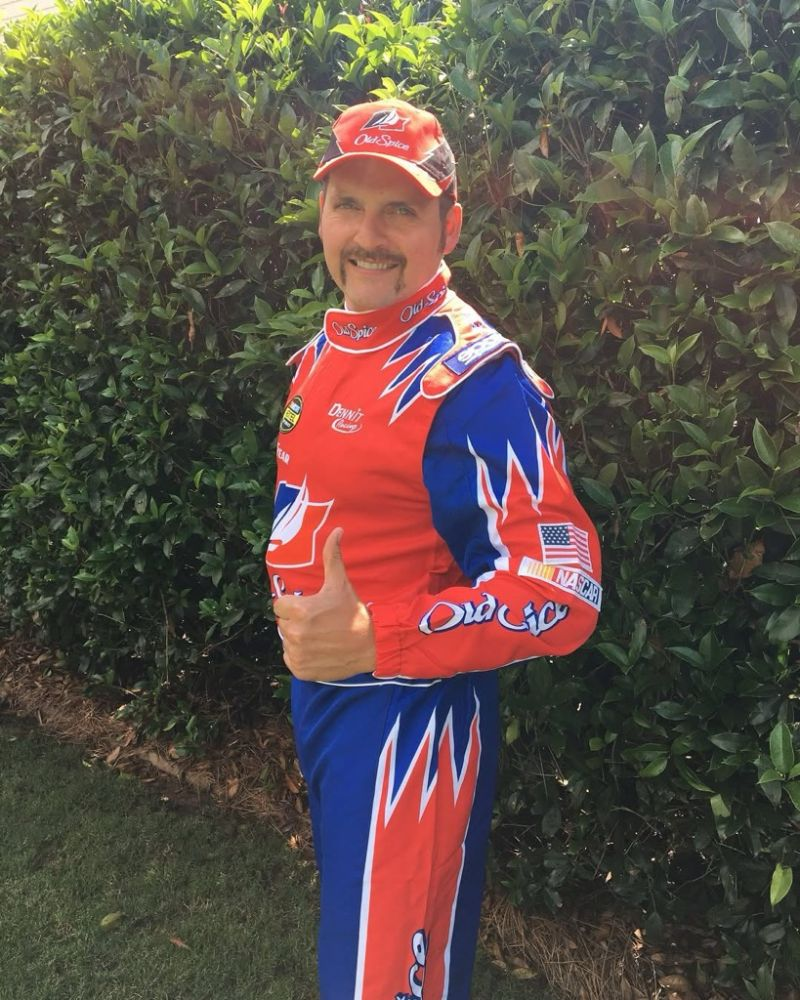
Zac Perkins in a full red and blue NASCAR-style racing suit and cap with a handlebar mustache, giving a thumbs up in front of a hedge

This Is My Favorite Outfit I've Ever Worn to Work

In 2018 he and a colleague went full Talladega Nights to host the Alteryx Grand Prix, a live analytics competition where data professionals build workflows on a main stage, against the clock, in front of thousands of people. The real MVP was the person who organized the whole event. He brings it up because he's been talking a lot about AI and customer experience lately: AI is transformative, and it will absolutely improve the customer experience. But it can't grow a handlebar mustache. Embracing AI matters for every knowledge worker — remembering what makes you smile, and making that infectious to the people around you, matters just as much.

"But can it grow an awesome handlebar mustache? I think not."
Read the full post on LinkedIn →
Career Arc

Ten years of building and scaling post-sale organizations

Apr 2025 – Present

VP, Customer Experience

PortSwigger

Recruited as founding VP to build a post-sale organization from zero. Built a 5-team CX function covering 14,000+ application security accounts, launched a CSM-sourced expansion motion, and made AI part of the daily operating model.

Aug 2019 – Mar 2025

Sr. Director → Global Head, Strategic Customer Success

Alteryx

Promoted three times. Grew managed ARR from $225M to $477M (+112%) while sustaining renewal rates above 92% through hyper-growth, IPO, and post-IPO transition. Scaled the global CSM organization 4× and architected a paid CS offering adopted as a company-wide reference model.

Nov 2015 – Aug 2019

Solutions Consultant & Customer Success Manager

Alteryx

CSM of the Year (2018) and CSM of the Quarter (Q3 2017) for driving outsized customer ROI within a strategic book of business.

Jul 2013 – Nov 2015

Senior Consultant

Resolution Economics

Statistical analysis and damages modeling in complex commercial litigation; presented findings to executive stakeholders and legal counsel. M.S. Applied Statistics, Penn State.